Data points
This spreadsheet yields significant quantitative data about the Harvard Project as a whole, but a few visualizations help to highlight certain data points. The visualizations highlight the social history of the respondents, such as their ethnicity, sex, education level, and occupation. If I had more time and more programming skills, I would have attempted to create more intricate graphs.
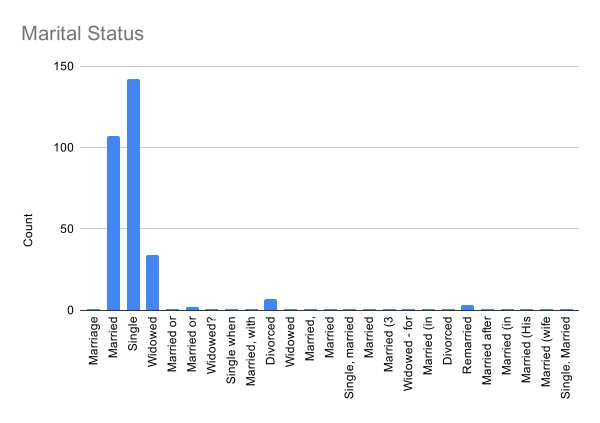
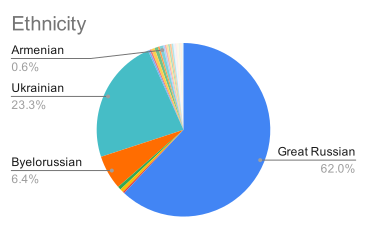
An overwhelming majority of the interviewees were male, with only about 25% of the interviewees being female. This is likely because men enjoyed a more privileged social position in Soviet society, which gave them more opportunities to leave the Soviet Union. Surprisingly, the split between respondents who were married and single was much smaller than expected. The split between single and married emigrés was about 50/50, though the interviews fail to mention if married individuals were able to successfully leave with their families or if they left them behind in the Soviet Union. Unsurprisingly, though, about 80% of respondents were either Russian or Ukrainian. The political, social, and economic devastation brought upon by the German invasion of the Soviet Union presumably pushed those respondents away from the Soviet Union, especially if they were already disillusioned with the Soviet system. Their disillusionment with the Soviet system could have also been brought on by their family’s or their own arrest. Around 30% of the respondents were arrested while living in the Soviet Union. The length of time for an arrest could have been a few days or it could have been years. Additionally, 73% of interviewees had a member of their family arrested while they were living in the Soviet Union.



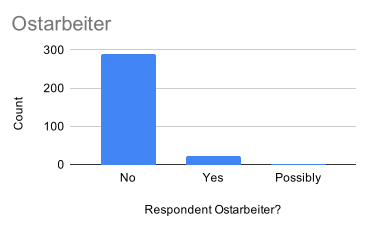
22 respondents were forcibly taken for forced labor as Ostarbeiters by Nazi Germany during their invasion of the Soviet Union. These respondents could have become disillusioned with the Soviet system because of the negative stigma they received upon being repatriated to the Soviet Union after World War II. Ostarbeiters, though unwilling forced laborers, were treated as if they were collaborators upon being repatriated, and the Soviets believed that somehow the former Ostarbeiters had been compromised by the Germans. The small number of former Ostarbeiters interviewed shows that many of them could have been fearful that their interview would expose them to Soviet agents, who would try to forcefully repatriate them. Conversely, it could also show that many former Ostarbeiters were still in the Soviet Union and unable to leave.
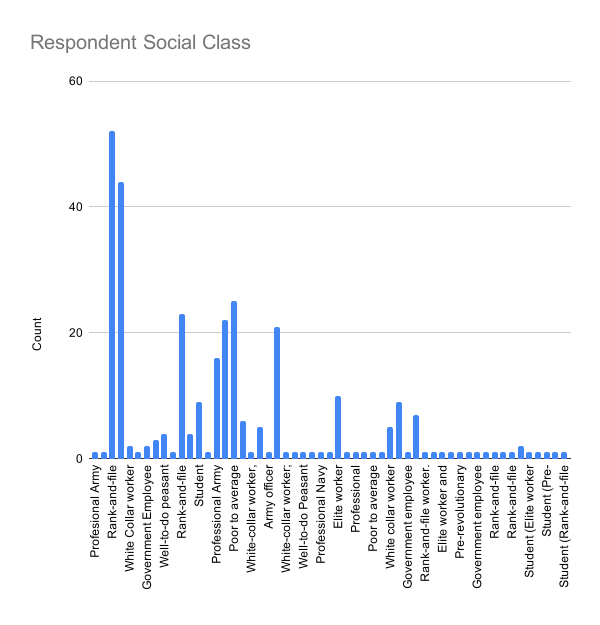
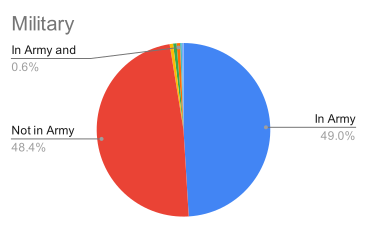
Most of the respondents were rank-and-file workers or intellectuals, with a smaller number being poor to average peasants. This data reveals that Lenin’s New Economic Policy was successful in transforming the Soviet Union into an educated, industrial state. If most of the respondents were Russian or Ukrainian, then it is plausible that many of them came from a peasant background, especially if they were from rural areas. The campaign for literacy and education in rural areas with peasants allowed for Soviet citizenry to obtain industrial jobs, pushing them toward cities and industrial centers. This is seen in each respondent’s facesheet in the line talking about the year each respondent moved from a rural to an urban area. About 50% of respondents served in the Soviet Military before leaving the Soviet Union. Some of them were defectors who fled during the Soviet Occupation of Germany after World War II.
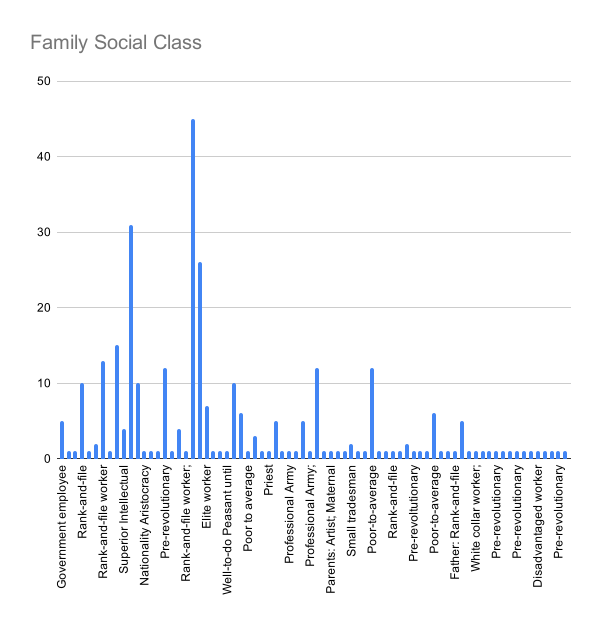
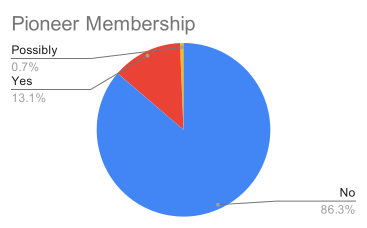
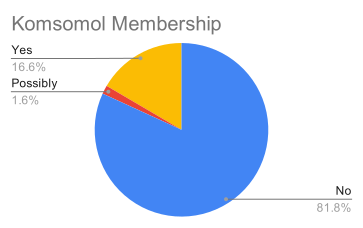
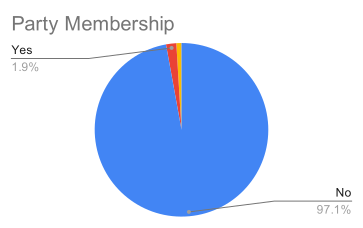
The respondents’ families were mostly well-to-do, part of the pre-revolutionary middle class, or poor to average peasants. Thus, it can be gleaned that there was some upward social mobility in the Soviet Union, but these gains were often overshadowed by the privileges of members of the Party and Government. 86% of interviewees denied any involvement in the Pioneers organization, though it must be noted that several interviewees noted that joining the Pioneers was a requirement, unlike the Komsomol and the Party, though most respondents noted that they were heavily encouraged to join the Komsomol. Furthermore, Komsomol members were also encouraged to apply for Party membership. Only 16% of respondents admitted to being members of the Komsomol, but as noted earlier, it is highly likely that they were lying and were members of the Komsomol. Furthermore, this number gets even smaller for members of the Party, with only about 2% of respondents admitting that they were members of the Communist Party. Again, it is very plausible that some of the interviewees were lying about not being part of the Party. Three respondents were candidates for Party membership. One of these respondents, case 526, originally denied that he was a member of any Communist organization in the Soviet Union, but later admitted that he was a member of both the Komsomol and the Party.